
Sales Directors struggling to open doors might recognise the problem in this 1958 advert.
Created for McGraw-Hill, the advert commonly known as The Man in the Chair offers a remarkably simple explanation of why brand-building helps businesses sell.
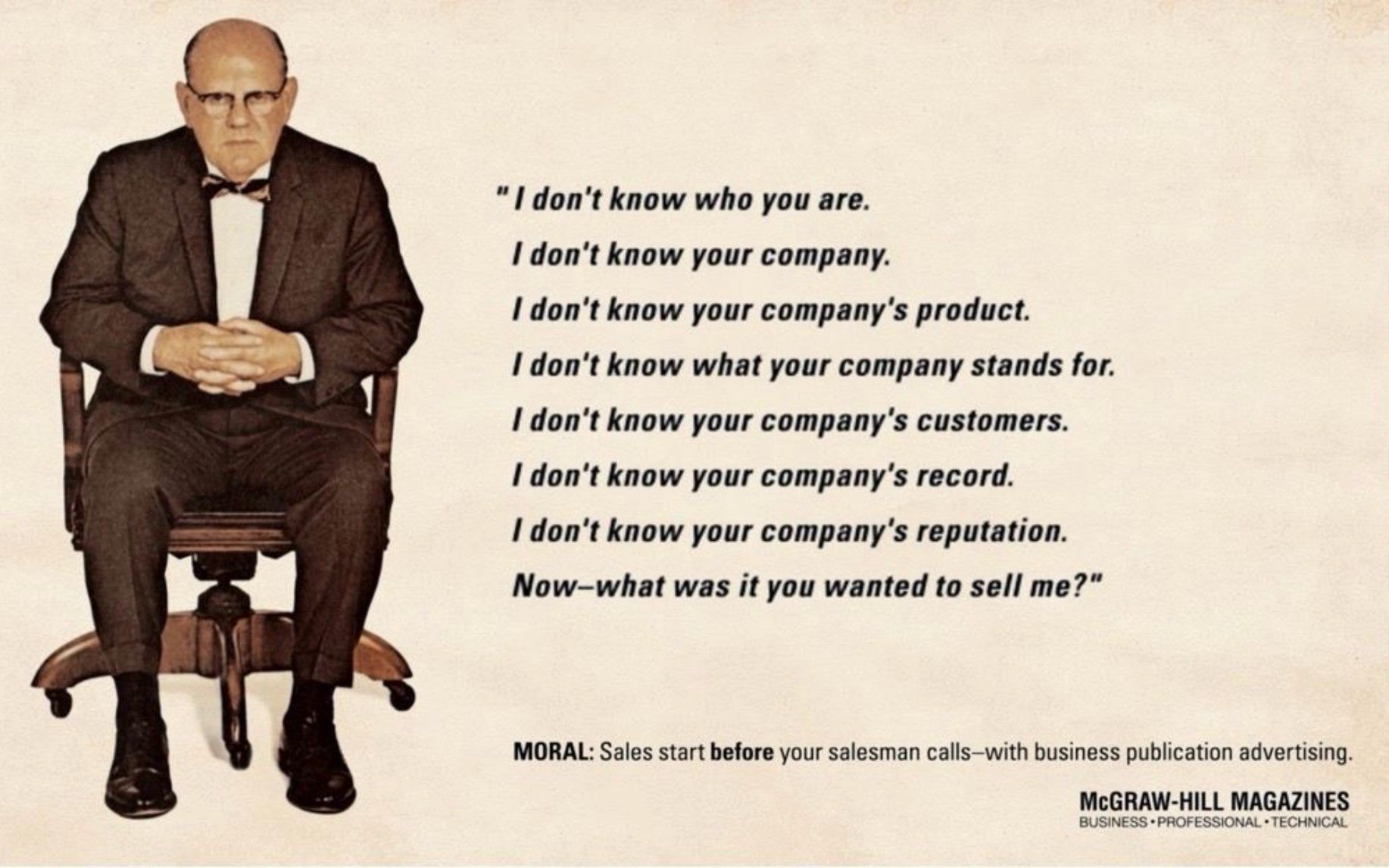
The prospective buyer in the image doesn’t know the salesperson, the company, its product, its customers, its record, its reputation or what it stands for.
Only after making that clear do they ask:
Now, what was it you wanted to sell me?
The advert was created long before social media, digital advertising, marketing automation and modern customer relationship systems. Yet the commercial problem it describes remains familiar.
Sales teams are often asked to create demand, establish credibility, explain the business, differentiate the offer and close the opportunity within the same conversation.
That’s too much to place on the pitch alone.
Brand-building does some of that work before the salesperson arrives. It helps potential customers recognise the company, understand its relevance and form an initial judgement about whether it appears credible.
That doesn’t mean every prospect needs to know or admire the brand before speaking to Sales. It also doesn’t mean brand activity can compensate for a weak offer or an ineffective sales process.
It means the starting position matters.
A salesperson entering a conversation on behalf of a known and clearly positioned business begins somewhere different from someone representing a company the buyer hasn’t encountered or can’t distinguish from its competitors.
The strongest sales and marketing systems don’t operate as separate departments handing leads backwards and forwards. They build familiarity and confidence over time, then convert that advantage through a relevant commercial conversation.
Lots has changed since 1958. Familiarity and credibility still change the starting position of a sales conversation.
Sales success still begins before the pitch.